Claude Opus 5.5 vs GPT-6 Astra: 25 Demos
See 25 Claude Opus 5.5 and GPT-6 Astra demos spanning browser games, 3D scenes, visual storytelling, voice tools, and work interfaces.
Which Demos Should You Open First?


Start with “Deliver the morning paper,” a GPT-6 Astra browser game shared by builtbysketch. It combines traffic, pedestrians, route choices, and scored paper throws in one playable delivery loop. That mix makes it useful for seeing how several moving parts can support a simple goal without requiring a long explanation. With 3,442,211 X views, it is also the most watched example in this group by a wide margin.
For Claude Opus 5.5, edwinarbus’s “Antikythera Diving Game” is the first game to open. The screen places a diver at a shipwreck, provides a clear “Begin the Dive” prompt, and includes visible movement controls. Its 73,324 X views put it well ahead of the other Claude examples here, and the scene shows how a familiar exploration setup can be turned into something immediately playable.
MatthewBerman’s “San Francisco City Simulation in Unreal Engine” is another useful Claude Opus 5.5 example. Moving cars, pedestrians, streets, and buildings fill a stylized 3D city. On the Astra side, bentossell’s “50 years of devices” turns generated device images into a site where visitors can save devices they owned or wanted. LinusEkenstam’s video visualization takes a different route, displaying an uploaded video as a dynamic 3D space with a timeline and preview frames.
What Do The GPT-6 Astra Games Show?


“A knight’s camp in 3D” begins with an image and a prompt, then becomes a browser scene where a knight cooks, trains, and rests. Creator vib3coded uses small character activities to make the camp feel occupied. It is a compact example of turning a visual starting point into a place with several distinct actions.
MarcDagatan’s “Drive out of a zombie city” presents a night-driving game and a public build where players steer through traffic and zombies. YutingM84881’s “Draw something that can outrun Jimothy” uses a playful cycle: draw a challenger, race it against a raccoon, revise the doodle, and try again. The first emphasizes navigation through a busy scene, while the second makes revision part of the game itself.
“The world, with a different perspective” moves away from game objectives. The Astra visualization lets visitors drag between two map projections and watch the world’s shapes change. Its direct interaction gives the comparison a clear visual form without extra controls competing for attention.
More Demos in This Section
What Do The Claude Opus 5.5 Games Show?


Claude Opus 5.5 appears across a wider set of game formats. In chetaslua’s “Tour a little neighbourhood,” visitors explore a small interactive neighborhood while Claude helps residents with everyday tasks. _MaxBlade’s multiplayer lawn-mowing simulator switches to first person, with a player steering a mower while other players move nearby.
Vasu_Devs shows a browser-based DOOM-style first-person shooter set in a brick corridor with a torch-lit passage. fuzzzypan’s yacht game offers camera angles, a sea-level selector, dawn, noon, and dusk settings, plus a horn. BhavikY663’s bow-and-arrow demo centers the view on a decorated lane with a timer and a visible “GO!” prompt.
For a familiar racing setup, builderhelmai’s Three.js kart demo places a blue kart on a stadium track behind a “Press Enter to Start” prompt. Together, these demos cover exploration, multiplayer simulation, first-person action, vehicle controls, archery, and racing without collapsing them into the same interface.
Which Demos Focus On Visual Storytelling?


“Three models build animated post-apocalyptic scenes,” shared by thehypedotnews, places three HTML-based Three.js films side by side. The outputs depict an amusement park, a ghost town, and a nuclear plant. Because the subject changes with each scene, the comparison is useful for looking at atmosphere, motion, and environmental composition across the three outputs.
chetaslua’s Claude Opus 5.5 launch video takes an all-code approach. The creator used an original tweet as the prompt and says the result uses no external music, sound, or image assets. frechezz’s “Code-Generated Paper-Cutout Short” uses red vertical paper-like panels and small green details for a stop-motion look, while Ananth7e’s animated SVG shows buildings, trees, clouds, and passing traffic on a small city street.
More Demos in This Section
Which Demos Look Useful For Work?
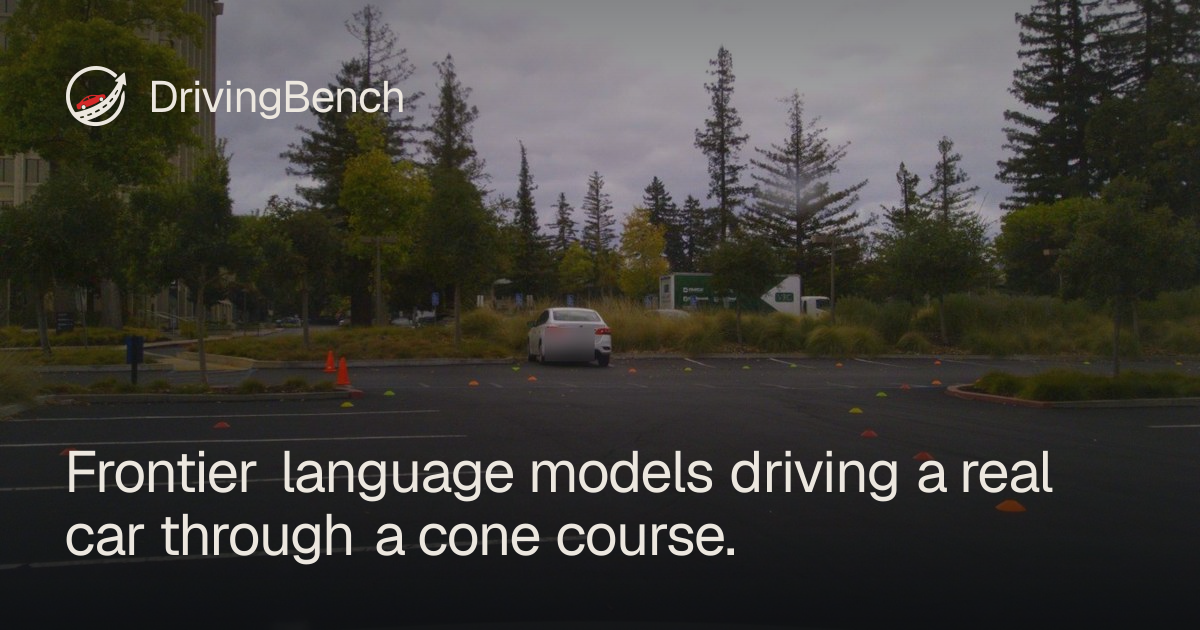
The GPT-6 Astra examples include a browser client for interruptible voice conversations with Gemini, built from public product documentation. “DrivingBench” moves outside the browser: frontier language models drive a comma-equipped Toyota through a cone course one command at a time, with a human supervisor ready to brake. CiusRadu’s Houdini workflow turns 17 reference images into a procedural Japanese-style building model.
On the Claude Opus 5.5 side, viticci’s “PonteMLX MLX Process Visualizer” represents token processing as a flowing river alongside API gateway indicators and RAM usage. The design gives an otherwise technical process a concrete visual structure. cherifdesigns’s Drata login page presents separate login and account-creation tabs, sign-in options, and a halftone visual on the right.
kevinkern’s finance app landing page explores presentation rather than process monitoring. Its “Everything in one place” headline sits over a muted 3D-style background with floating panels. These work-focused demos range from operational interfaces and product pages to voice software, procedural modeling, and supervised vehicle control.
What Is The Clearest Difference Between Them?

The GPT-6 Astra demos often make the interaction itself the main attraction. Delivering papers, drawing and revising a racer, dragging between map projections, interrupting a voice conversation, and exploring video as a 3D space all give the visitor a specific action with an observable result.
The Claude Opus 5.5 demos spread across more visual formats in this selection. They include an Unreal Engine city simulation, a shipwreck game, a multiplayer mowing simulator, a token-processing dashboard, Three.js films, an animated SVG street, and conventional product-interface work. Early demos cannot show everything either model can do.
More Demos in This Section
- The world, with a different perspective.
- Build a live voice client for Gemini
- Video explored as a 3D space-time visualization
- Antikythera Diving Game
- San Francisco City Simulation in Unreal Engine
- A Multiplayer Lawn-Mowing Simulator
- PonteMLX MLX Process Visualizer
- Three models build animated post-apocalyptic scenes
- Animated SVG City Scene
Where Should You Start?
Open builtbysketch’s paper-delivery game if you want a complete GPT-6 Astra game loop with movement, choices, obstacles, and scoring. Choose edwinarbus’s Antikythera diving game for a Claude Opus 5.5 example built around exploration and visible player controls. Those two make the most direct game comparison.
For 3D environments, compare vib3coded’s knight camp with MatthewBerman’s San Francisco simulation. For practical interfaces, pair the Astra Gemini voice client with viticci’s PonteMLX visualizer. If your interest is coded animation, the Three.js post-apocalyptic films and chetaslua’s JavaScript launch video provide two distinct Claude Opus 5.5 starting points.